





Managing Change in Brownfield Environments
Industrial infrastructure is constantly evolving. Modifications, expansions, temporary interventions, maintenance activities and operational improvements continuously reshape facilities over time. In brownfield environments, even relatively small field changes can create significant operational, engineering and safety risks when infrastructure information is no longer aligned with actual conditions.
Management of Change (MoC) processes are therefore critical for maintaining operational integrity, engineering accuracy and infrastructure safety across industrial assets.
One of the biggest challenges in MoC processes is the lack of trusted infrastructure visibility before change begins. Engineering documents may be outdated, field conditions may differ from existing records and relevant infrastructure information is often fragmented across multiple systems and departments.

As a result, engineering teams, operations personnel and contractors frequently rely on:
- disconnected documentation
- repeated site visits
- manual field verification
- tribal knowledge
- fragmented communication workflows
This increases project uncertainty, slows down decision-making and creates additional operational risks during modifications and brownfield project execution.
Infrastructure Intelligence for Safer Change Management
Virtual Plant® helps organizations establish a connected infrastructure intelligence environment that improves visibility before, during and after infrastructure changes.
By combining validated engineering information, reality capture and connected asset intelligence, the platform enables stakeholders to better understand:
- existing field conditions
- affected assets and systems
- surrounding infrastructure
- underground constraints
- operational dependencies
- related engineering documentation
within a single operational environment.
This allows engineering, maintenance, integrity and operational teams to collaborate around the same infrastructure reality instead of disconnected information sources.

Reducing Site Dependency
Traditional MoC workflows often depend heavily on repeated field visits and manual walkdowns to verify infrastructure conditions before decisions can be made. Virtual Plant® helps reduce this dependency by enabling remote infrastructure visibility and engineering-driven validation workflows based on captured field reality.
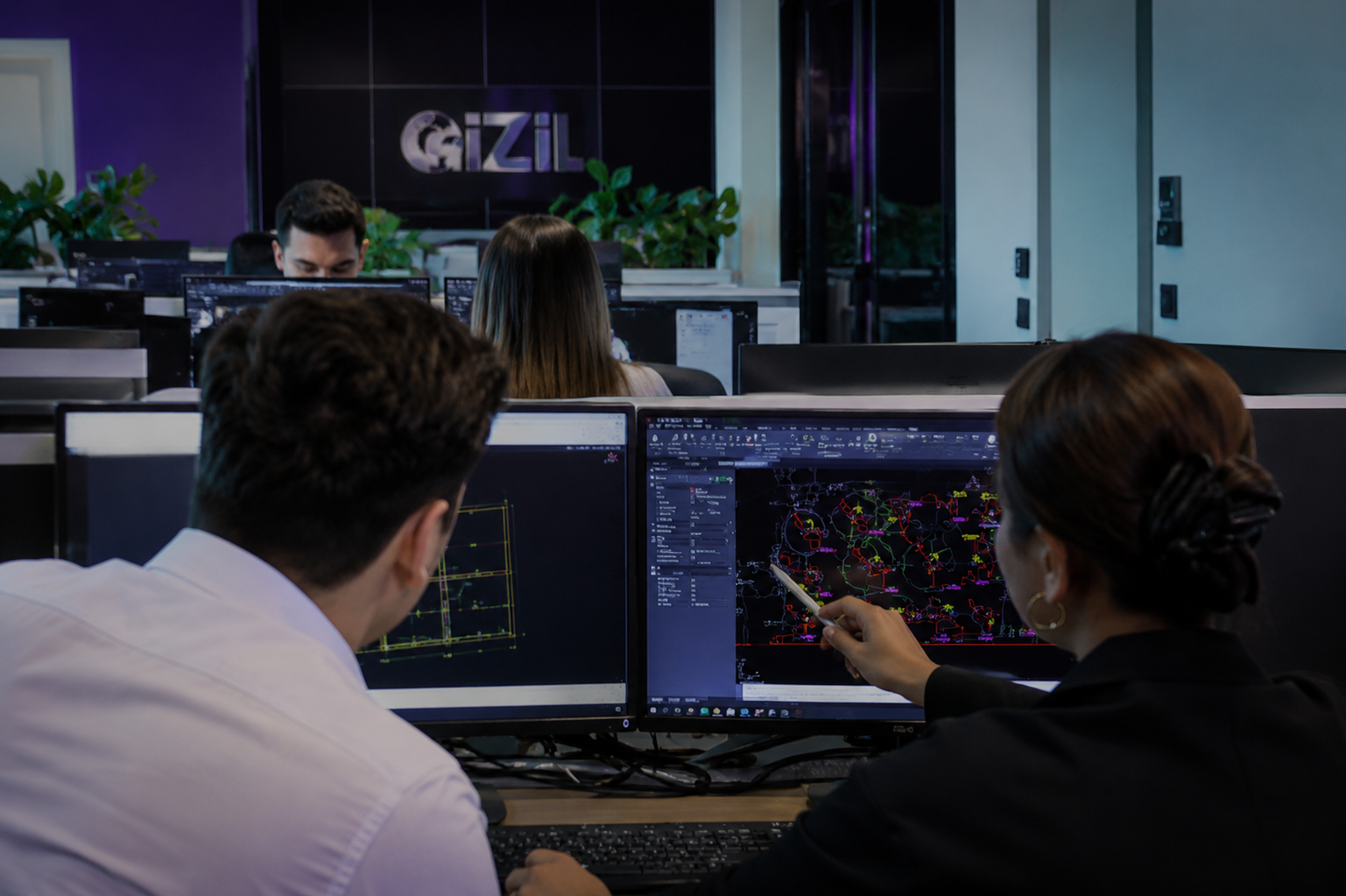
Teams can review infrastructure conditions, validate documentation, annotate observations and assess modification impacts remotely before site interventions are required. Site walkdowns can then become more targeted, efficient and operationally focused.

Object-Based Change Visibility
Because Virtual Plant® is built around connected infrastructure objects, changes can be evaluated with significantly better context and traceability.
Engineering documents, tagged assets, maintenance information, underground infrastructure and operational observations remain interconnected within the same environment. This improves visibility around affected infrastructure areas and helps reduce overlooked dependencies during brownfield modifications.
Annotations, comments, engineering observations and validation activities can also remain directly connected to the related infrastructure objects throughout the MoC process.
Supporting Brownfield Modernization
As industrial organizations accelerate modernization, expansion and energy transition initiatives, the complexity of managing existing infrastructure continues to increase. Virtual Plant® helps organizations approach Management of Change with a more connected, validated and operationally accessible infrastructure intelligence foundation.
Rather than treating MoC as only a document workflow, Virtual Plant® enables organizations to manage change around actual infrastructure reality — improving visibility, collaboration and operational confidence across brownfield environments.