





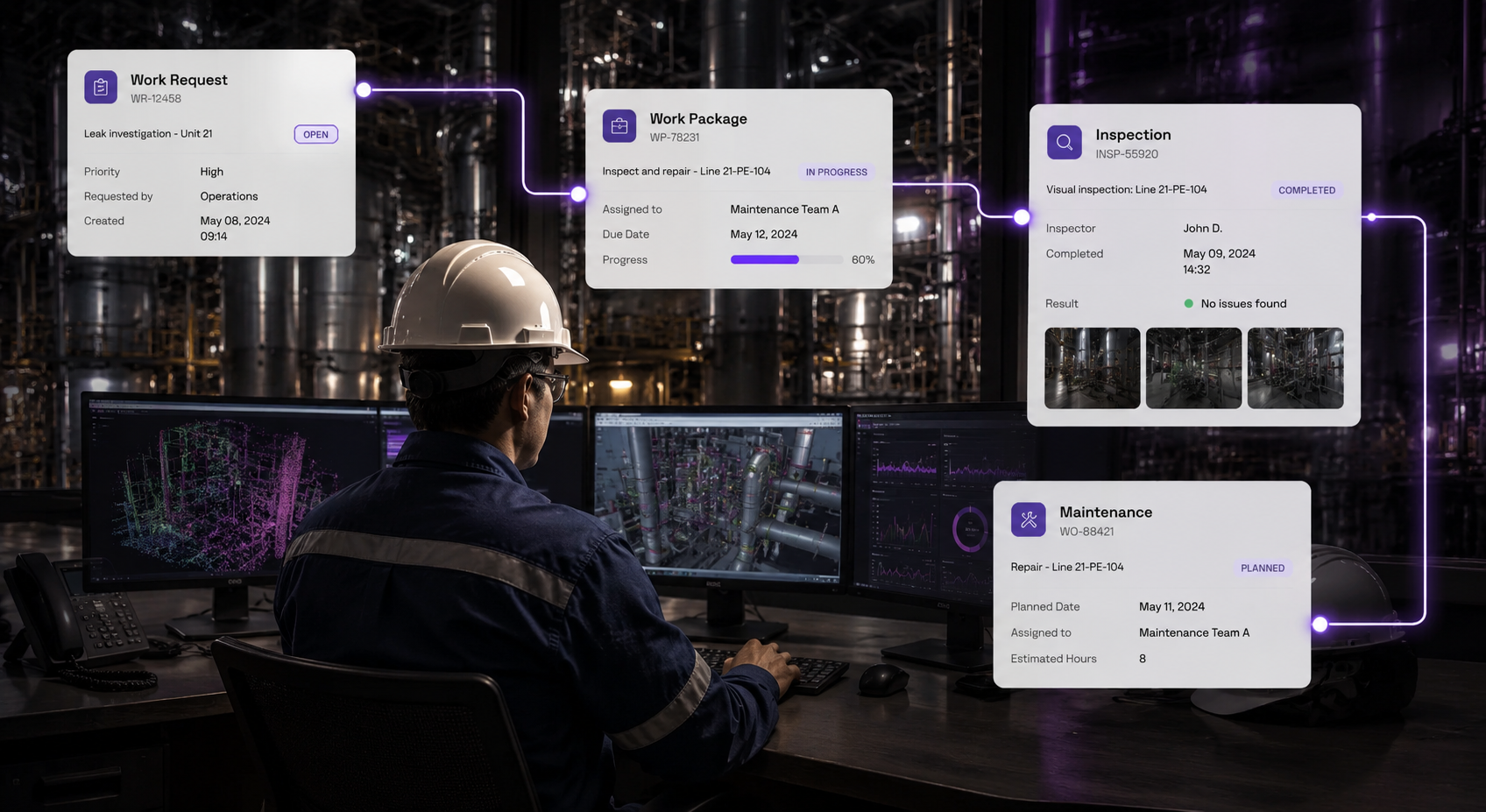
From Fragmented Systems to Connected Operations
Industrial infrastructure information only becomes valuable when it can support real operational workflows across maintenance, engineering, integrity and asset management teams. Virtual Plant® is designed not only to centralize infrastructure intelligence, but also to make it operationally accessible within daily industrial activities.
Most industrial organizations operate across fragmented digital environments built over many years. CMMS platforms, ERP systems, GIS environments, document repositories and engineering databases often exist independently from each other, while the actual infrastructure context remains disconnected. As a result, users frequently spend more time searching for information and validating field conditions than making decisions.
Integration with Existing Enterprise Ecosystems
Virtual Plant® bridges this gap by creating a connected infrastructure intelligence layer around existing assets, documents and operational systems. The platform can integrate with enterprise environments such as CMMS, ERP, GIS and engineering databases while providing spatial and object-based infrastructure context around the information already stored inside these systems.
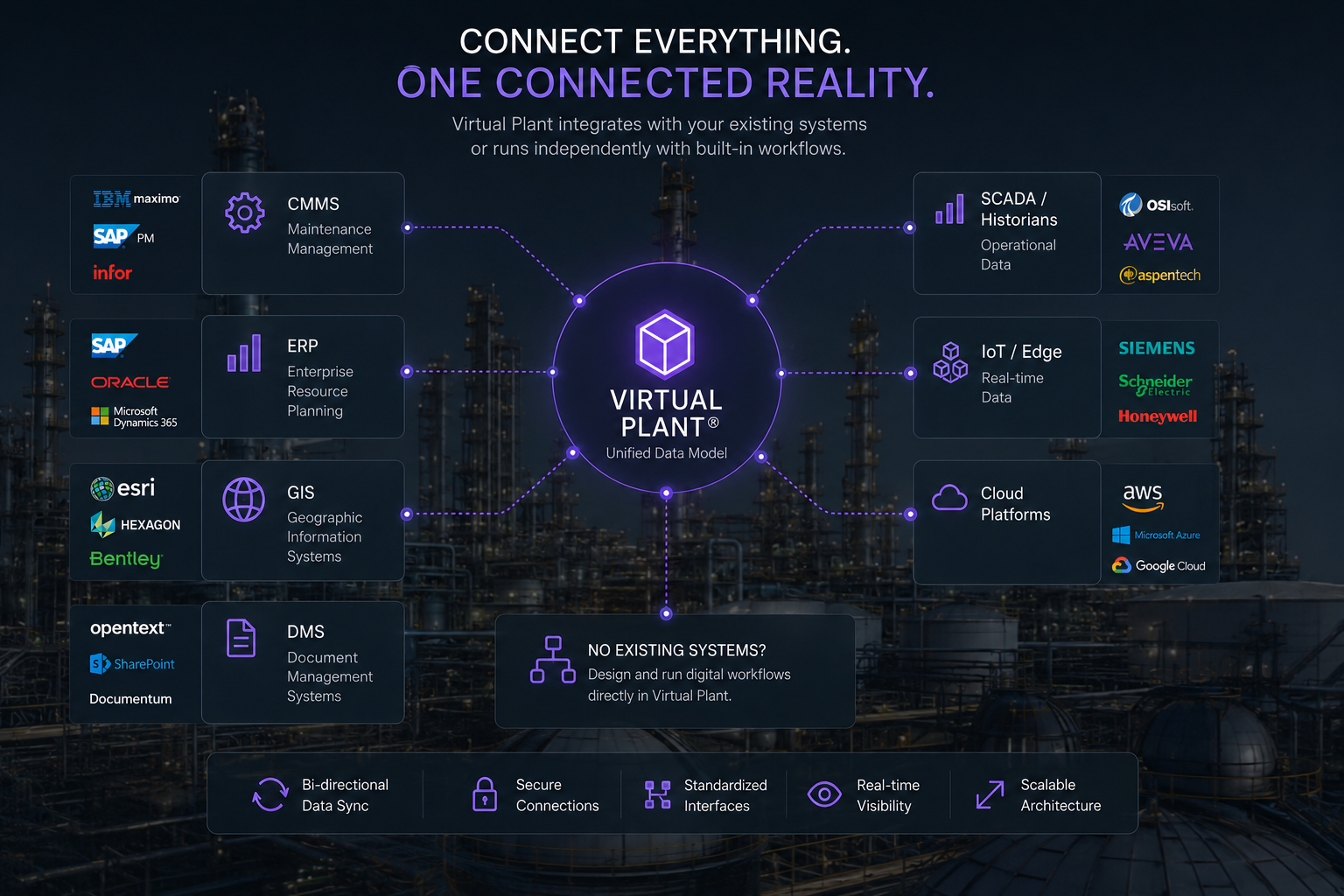
Instead of replacing existing software investments, Virtual Plant® improves accessibility and operational understanding by connecting information directly to real infrastructure objects and field reality. Maintenance records, engineering documents, inspection histories, GIS layers, work orders and operational metadata can all become accessible through the related infrastructure object inside a single connected environment.
Flexible Workflows Without Heavy Enterprise Complexity
Not every industrial organization has mature enterprise systems or fully structured digital workflows in place. In many brownfield environments, operational processes still depend heavily on spreadsheets, disconnected folders, emails and manual coordination. Virtual Plant® can therefore also function as a lightweight operational workflow environment where needed.
The platform enables organizations to manage practical infrastructure-related processes directly within the Virtual Plant® environment, including engineering annotations, maintenance coordination, infrastructure observations, object-based document management, inspection comments and field collaboration activities. Because these workflows remain connected to infrastructure objects and spatial context, users work around the actual infrastructure environment rather than disconnected records and isolated interfaces.

Object-Based Operational Accessibility
At the core of this approach is an object-based operational structure. Every asset inside Virtual Plant® can become a connected operational node linked to engineering documents, maintenance activities, annotations, inspections, operational history and related infrastructure information. Users can navigate directly from a field asset to its associated P&IDs, inspection records, underground infrastructure information, comments or operational discussions within the same environment.
This creates a significantly more intuitive and contextualized working environment compared to traditional document-based or system-based operational approaches.
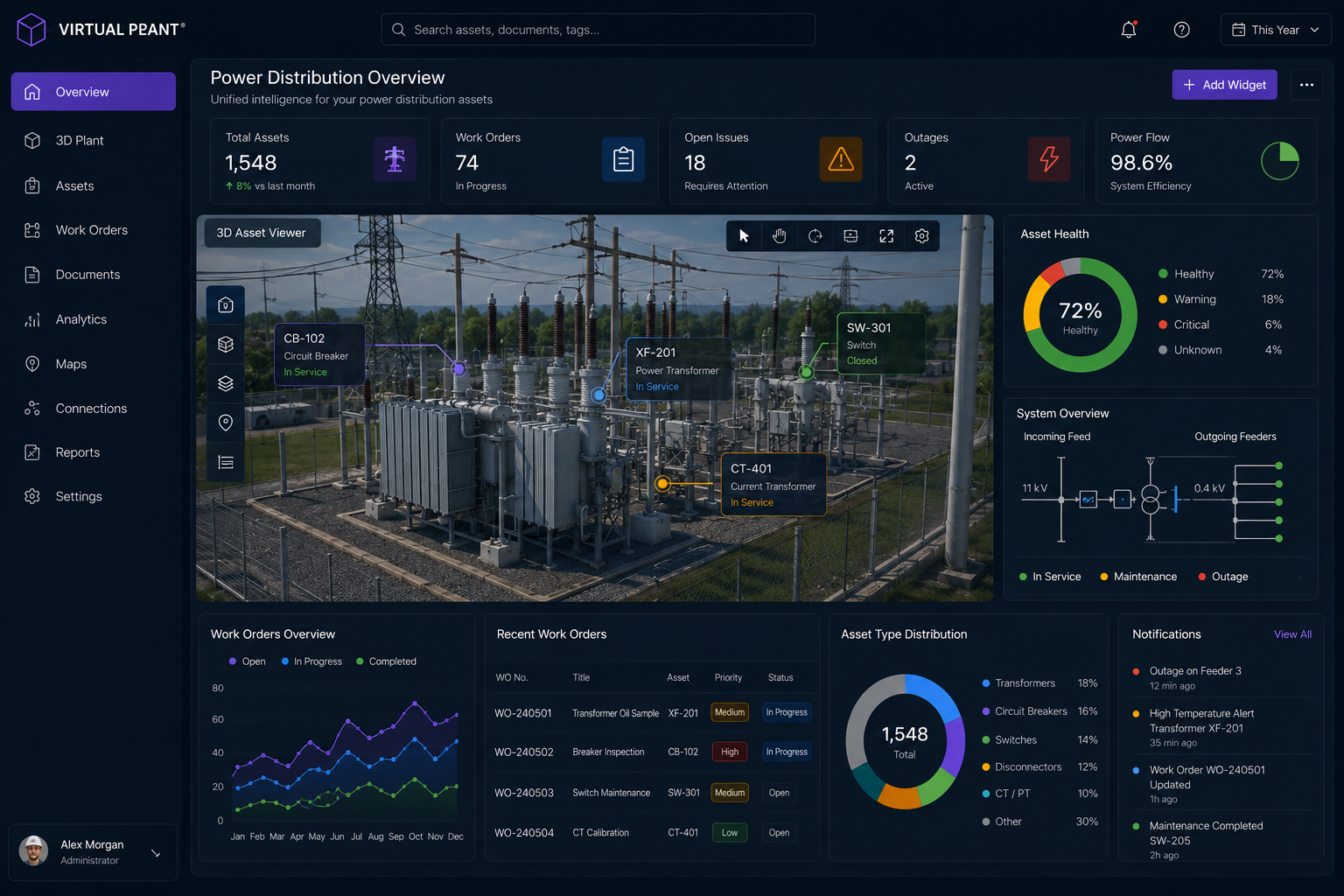
Infrastructure Intelligence Dashboards
Virtual Plant® also provides configurable dashboards and infrastructure intelligence views that support operational visibility across projects, maintenance activities, validation progress and infrastructure readiness. Because all information remains connected to validated infrastructure objects and field conditions, these dashboards become significantly more meaningful than isolated reporting systems without spatial or operational context.